


We can be passionate about politics and still be unclear about what we want government to build. I know this because I have been there.
My first major political commitment was to Goodluck Jonathan. I voted for him. I campaigned for him. I mobilised others to support him.
His story connected with me. “I had no shoes.” Here was someone whose beginnings felt familiar. I felt that parts of the political establishment wanted to push him aside, and I wanted to stand with him. Supporting him felt personal.
Looking back, I have to ask myself what I expected his government to do. What did I understand about his economic thinking? Which reforms did I expect him to pursue? How would his government strengthen institutions, raise productivity or help businesses employ more people?
I could explain why I stood with Jonathan. I had given far less thought to what I wanted his government to build.
Fifty-seven days apart
I saw that gap more clearly when I revisited two of my old Facebook posts. On 20 November 2014, I wrote Jonathan a birthday tribute. I prayed for his safety, his family and his strength to lead the country.
“I love you President Goodluck Ebele Jonathan and i hope you stay top always.”
I ended the tribute with these words.
“I am a Nigerian not your Fan.”
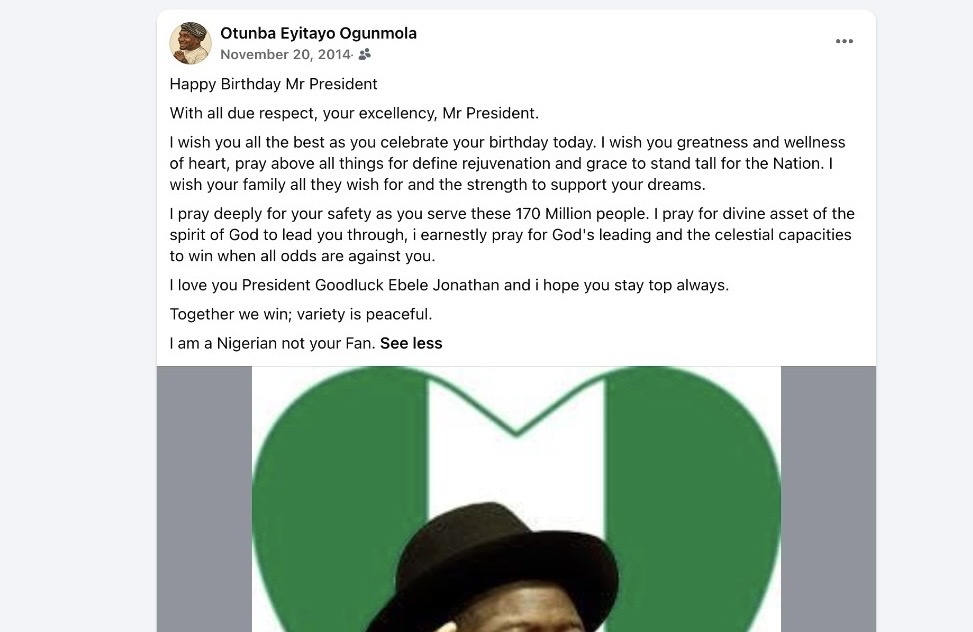
Fifty-seven days later, on 16 January 2015, I was calling for another president.
“We sincerely need another president... The evil called Jonathan must end..”
I followed that with an accusation of corruption. That was my judgment at the time. I share the post here to examine the certainty with which I spoke.
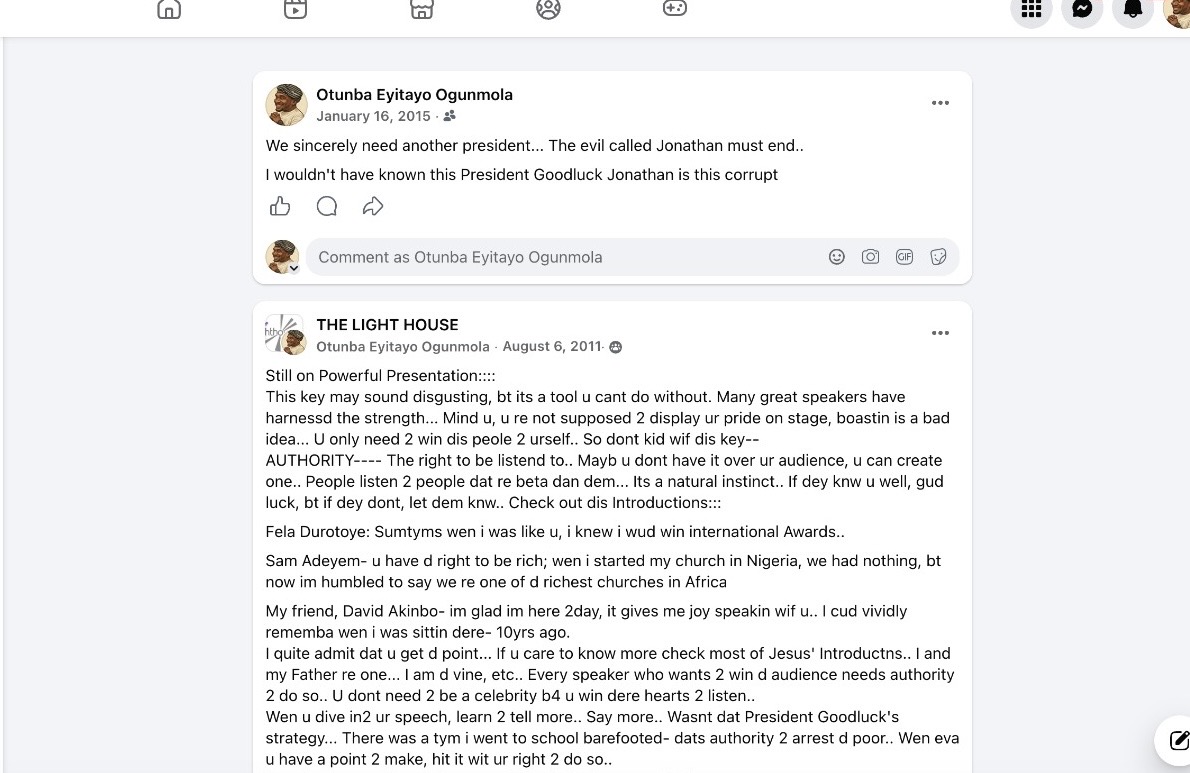
I sounded equally convinced in both posts. My position had changed. Had my understanding deepened?
A birthday tribute tells us little about someone’s policy views. And changing your mind when the evidence changes is part of good judgment. What those posts helped me see was how easily I could express admiration or disappointment, and how much harder I found it to explain the standards I was applying.
I use political naivety to describe the gap between the strength of our political convictions and the depth of our understanding of their consequences. Anyone can fall into it. Sympathy, identity, resentment and loyalty all influence how we see leaders. Their influence becomes a problem when those feelings make the whole decision for us.
Choosing who holds power is one decision. What follows depends on the policies leaders choose, the institutions that carry them out and the public’s ability to hold them to account.
The questions behind the fuel subsidy debate
I think about this when I look back at the resistance to fuel subsidy removal under Jonathan. Concerns about corruption, government waste and public trust deserved serious attention. Citizens had every reason to ask how the government would use the money it expected to save.
The subsidy itself deserved the same scrutiny. What did it cost to maintain? Who benefited from the way it was designed? What else could that money fund? How would vulnerable households cope during a transition? If we wanted to keep it, what were we proposing to address the underlying problem?
A government asking households to absorb higher costs owes them a credible plan. It should explain how its policy is meant to work, what support people can count on, and what results the public should expect. Citizens should be able to see where the money goes and judge whether the policy is delivering.
I want to apply the same standard when I think about Tinubu’s leadership. Whether someone can afford food, transport or rent belongs at the centre of any assessment of economic reform. So do the questions about the policy itself. What problem is it trying to solve? Who bears the cost in the meantime? What evidence would justify keeping it, changing course or reversing it? I owe those questions the same care whether I support a policy or oppose it.
What I look for now
As a builder, I pay attention to where one part of a system depends on another. Education has to connect to useful skills, and those skills have to lead somewhere. Employers need the infrastructure and capital to grow and hire. Public revenue needs to reach the services people rely on.
I can see the limits of training when there are too few jobs for people to move into. I can see the limits of business ambition when basic infrastructure makes it expensive to operate. These are outcomes I can look for when a leader promises opportunity. Are more people finding work? Can more businesses afford to expand? Are public services getting better?
When I reread “I am a Nigerian not your Fan,” I hear a standard I needed to practise. Before I praise or condemn, what evidence am I relying on? What would make me reconsider? If I want change, can I explain what should change and how I would know it was working?
Jonathan’s story still moves me. Today, I also want to know whether the policies a leader proposes can improve millions of stories like mine.
Fifty-seven days were enough for me to change my position. Learning how to arrive at one has taken much longer.